A Love Letter to Crepes, Pannekoek, and the Pan That Brings Them Together

Crepes are one of those foods that seem simple until you actually try to make them. A batter of just a few ingredients, cooked thin and fast, yet capable of being elegant, rustic, indulgent, or deeply comforting. Sweet or savoury, breakfast or dinner, weekday or celebration — crepes have been quietly showing up for us for centuries.

They’re believed to have originated in Brittany, in the northwest of France, where buckwheat crepes (galettes) were a practical staple long before refined flour became widely available. There’s even a legend tied to Candlemas (La Chandeleur): if you could flip a crepe with one hand while holding a coin in the other, prosperity would follow you for the year. In South Africa, we don’t need a coin — we just need cinnamon sugar and a strong opinion about whether lemon is optional (it’s not).

The Heart of the South African Table

While the French have crepes, we have pannekoek — and they’re very much cousins. The batter is similar, the method familiar, but the spirit is unmistakably local. South African pannekoek tends to be slightly thicker, a little more forgiving, and almost always rolled up with cinnamon sugar (sometimes with a squeeze of lemon, if you’re feeling fancy). They’re not plated delicately — they’re stacked on a tea towel, eaten hot, and somehow disappear faster than anyone planned.

What crepes and pannekoek share is restraint. No raising agents. No fluff. No shortcuts. Everything depends on technique: the consistency of the batter, the temperature of the pan, and that moment when you tilt and swirl, hoping the batter behaves. The first one is still a write-off — whether you’re cooking in Paris or Pretoria — but after that, you find your rhythm.

The Art of the Perfect Flip: Where Tradition Meets the Right Tool

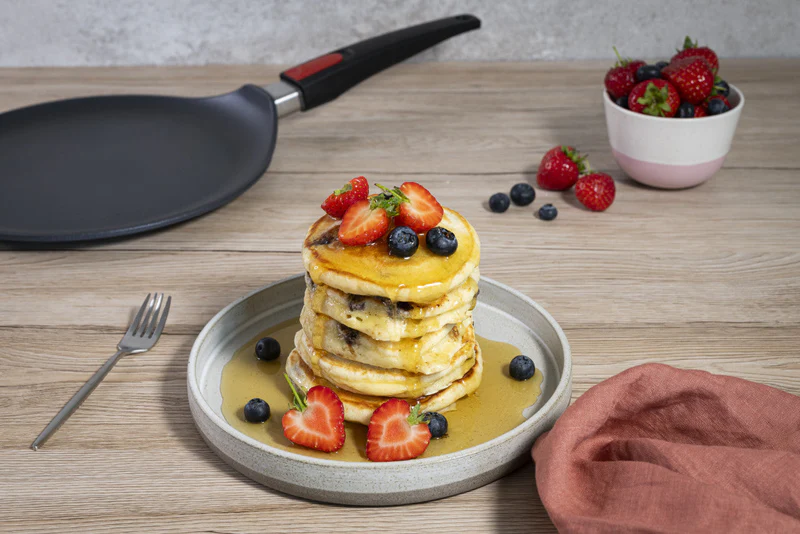
A proper crepe pan makes all the difference. A flat, shallow pan with even heat lets the batter spread easily and cook consistently. No hot spots. No sticking. No awkward high sides getting in the way of a confident flip (or a careful one, depending on your relationship with risk). It’s the kind of pan that fades into the background, which is exactly what you want.

Once you get going, crepes — or pannekoek — become instinctive. You stop measuring. You tweak the batter by feel. You stack them high and fill them with whatever makes sense at the time: lemon and sugar, ham and cheese, leftover mince, mushrooms, or simply more cinnamon sugar because honestly, why mess with a classic?

That’s the quiet magic of these pancakes. They’re humble, nostalgic, endlessly adaptable, and deeply comforting. Whether you call them crepes or pannekoek, they’re meant to be shared, made in batches, and eaten warm — preferably straight from the stack.

And if a good pan helps make that easier? Well, that just means more time enjoying the good part.

Click here to explore EPromo’s rather fabulous crepe pan, made in Germany but perfect for South African pannekoek.

TOP